A dark water stain at the sanctuary ceiling, peeling paint high on the spire, or a loose piece of trim after a windstorm can seem like a small maintenance concern. On a church building, those signs often point to a larger problem far above the congregation. Timely church steeple repair protects more than a landmark. It safeguards the people beneath it, preserves a visible witness in the community, and prevents deferred maintenance from becoming an emergency.
A steeple is exposed to the hardest conditions on the property. Wind-driven rain finds failed joints. Sun breaks down coatings and sealants. Freeze-thaw cycles open masonry cracks. Birds and insects enter gaps that were once no wider than a pencil. Because the damage is elevated and difficult to inspect, a steeple can deteriorate for years before the church sees evidence inside.
Why Steeple Problems Become Expensive So Quickly
Most steeple failures begin at transitions: where metal flashing meets roofing, where decorative trim joins the structure, where louvers penetrate a tower wall, or where a finial is fastened at the peak. These locations move, shed water, and receive intense weather exposure. When a sealant joint fails, water does not always appear directly below the opening. It can travel along framing, insulation, or interior finishes before revealing itself in the sanctuary.
That delay matters. Moisture that begins as a minor leak can rot wood framing, corrode fasteners, damage plaster, stain ceilings, and create conditions for mold. In masonry towers, water can saturate brick and mortar, then expand during freezing temperatures. What looked like a hairline crack may develop into spalling brick, failing mortar joints, or a loose exterior element.
There is also a safety question. Loose copper, slate, fiberglass panels, cross assemblies, trim, or masonry at elevation should never be treated as cosmetic. A falling component can endanger pedestrians, damage lower roofs, and create liability for the church. When a visible piece has shifted, the concealed attachment system deserves close examination as well.
The Warning Signs Church Leaders Should Take Seriously
A steeple does not have to be visibly leaning to need attention. Trustees and facility leaders should watch for changes after storms and during routine property walks. Streaking beneath decorative details, paint that blisters or peels in concentrated areas, open seams, cracked caulking, rust stains, missing shingles, and damaged flashing all indicate that water may be entering the assembly.
Inside the building, investigate ceiling stains, recurring leaks, musty odors in attic spaces, damp insulation, plaster cracks, or unexplained discoloration near tower walls. These symptoms do not always originate at the roofline. A failing steeple base, louver, cupola, or upper-wall penetration may be the source.
Age is another factor. A church may have repainted a steeple several times without addressing deteriorated substrate, failed sealants, or corroded fasteners underneath. Fresh paint can improve appearance temporarily, but it cannot correct soft wood, leaking flashing, cracked fiberglass, or compromised framing. A proper evaluation distinguishes between a maintenance coating project and work that requires restoration or rebuilding.
After Severe Weather, Inspect With Care
Wind, hail, ice, and heavy rain can expose vulnerabilities that were previously hidden. Do not ask a volunteer to climb onto a steep roof or into a confined tower simply to take a closer look. Photograph what can be safely seen from the ground, note the location of any interior leaks, and keep people clear of areas beneath visibly loose materials.
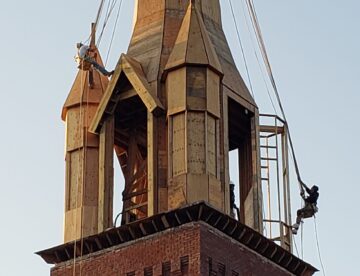
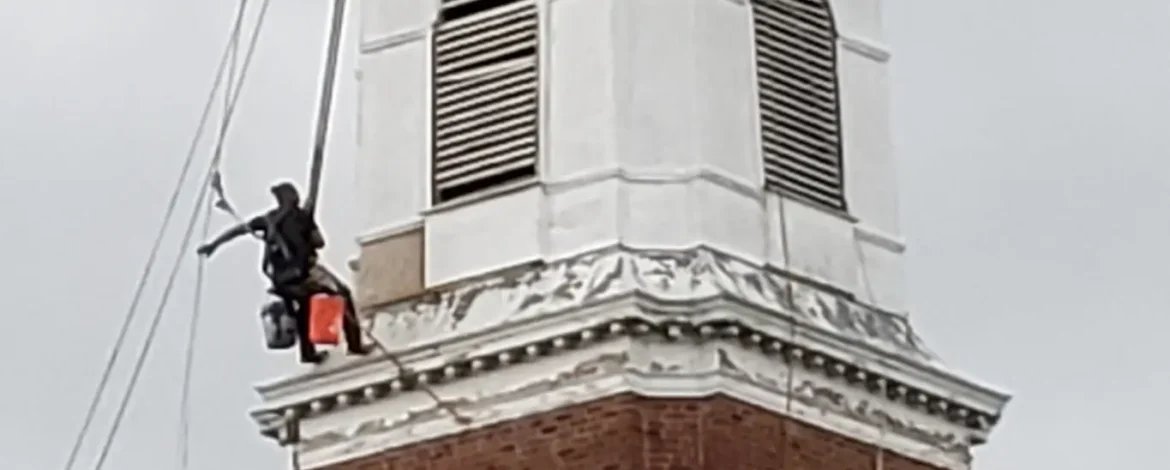
A high-access church restoration contractor can assess the steeple, roof transitions, and tower exterior without automatically requiring extensive scaffolding or a large crane setup. The right access method depends on the building, surrounding site, scope of damage, and safety requirements. Specialized steeplejack work can often reduce disruption and cost, but some structural conditions rightly call for more substantial access and engineering support.
What Thorough Church Steeple Repair Includes
No two steeples fail in exactly the same way. A small fiberglass steeple with failed clear coat requires a different approach than a 150-year-old timber tower with water-damaged framing. Still, responsible repair follows a disciplined process: identify the source of failure, determine how far damage has traveled, repair the substrate, restore weather protection, and finish the exterior with materials suited to the building.
For wood steeples, work may include replacing decayed trim and sheathing, repairing framing, resetting loose architectural details, and installing properly integrated flashing. Craftsmen should preserve sound original material whenever practical, particularly on historic buildings, while refusing to cover damaged wood that will continue to deteriorate behind a new coating.
Masonry steeples and towers may require tuckpointing with mortar compatible with the original construction, brick replacement, crack repair, water-management corrections, and stabilization of loose stone or terra cotta. Mortar that is too hard can damage older brick by trapping moisture, so material selection is not a place for shortcuts.
Fiberglass steeples present another set of concerns. Cracking, delamination, fading gel coat, failed seams, and damaged bases can allow water into the structure. Repairs should address the fiberglass itself before primers, coatings, or finish paint are applied. Simply painting over a cracked panel may improve appearance briefly while allowing the underlying failure to spread.
Roofing and flashing are often part of the scope because a steeple is only as watertight as its connection to the roof. Proper counterflashing, step flashing, membrane transitions, and sealant details matter far more than a bead of caulk applied at the surface.
Preservation Requires More Than a Good-Looking Finish
Churches understandably want a steeple to look dignified again. Its appearance speaks to the care a congregation gives its house of worship. Yet visual improvement should follow sound repair, not replace it.
Historic details deserve careful documentation before work begins. Decorative louvers, cornices, crosses, finials, and original trim profiles often carry the character of the building. When replacement is necessary, reproducing those details faithfully can preserve the church’s architectural witness while providing a durable installation for the future.
Lead paint is also a consideration on older structures. Disturbing historic coatings requires appropriate testing, containment, and safety practices. The same is true of deteriorated materials at height. A low bid that overlooks these realities can become costly when the job stalls, damages original fabric, or leaves the church with an incomplete repair.
Planning the Work Without Disrupting Ministry
A clear scope gives a church board the confidence to make wise decisions. Before approving work, ask what is causing the failure, which materials need repair or replacement, how the contractor will access the steeple, and what temporary protection will be used if weather arrives during the project. The proposal should also explain what is included for surface preparation, flashing, coatings, cleanup, and any structural recommendations.
Budget decisions are rarely simple. A limited repair may be appropriate when damage is isolated and the rest of the steeple is sound. When repeated leaks, widespread rot, or obsolete materials affect the entire assembly, phased repairs can sometimes cost more over time than a comprehensive restoration. The right choice depends on the building’s condition, available funds, and the congregation’s long-term plans.
Scheduling matters as well. Churches may need to protect Sunday services, weddings, funerals, school operations, and community ministries. Experienced restoration crews plan access, staging, noise, and work zones with the life of the church in mind. The goal is not merely to finish a construction task, but to help the congregation continue its ministry safely.
A Stewardship Decision for the Next Generation
Church steeple repair is an act of stewardship. The building is not the Church, but it is the place where the Church gathers, prays, serves, welcomes neighbors, and passes faith to the next generation. Caring for it faithfully helps preserve both its usefulness and its testimony.
Inspired Heights Ministries brings specialized high-elevation craftsmanship to churches facing these difficult decisions, with repair methods shaped by the realities of historic materials, weather exposure, and active ministry. A timely professional assessment can clarify whether a steeple needs a minor correction, targeted restoration, or a larger rebuilding plan.
If your congregation has noticed leaks, visible deterioration, or storm damage near the tower or spire, do not wait for the next season of weather to provide the answer. Begin with a careful evaluation, protect what can be preserved, and make repairs that honor both the building’s history and the work God has entrusted to your church.