
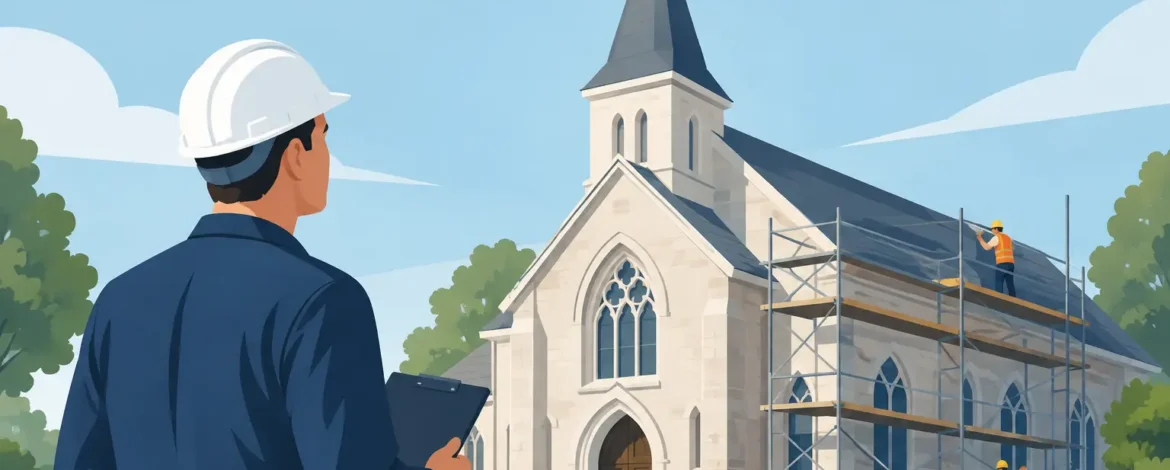
A leak at the base of a steeple, loose masonry above a main entrance, or peeling paint high on a tower can appear to be a small maintenance concern. In an older church, it may be evidence of water intrusion, failing materials, or structural deterioration that has been developing out of sight for years. Choosing the right church restoration contractor is therefore not simply a construction decision. It is an act of stewardship for the place where your congregation gathers, worships, serves, and bears witness in its community.
Church buildings bring together challenges that ordinary commercial work does not always address. A contractor may be capable of replacing a roof or painting an exterior but lack the experience to work safely around stained glass, historic masonry, aging steeples, decorative woodwork, and occupied sanctuaries. Church leaders need a partner who can identify the true condition of the building, explain the available options plainly, and carry out the work with respect for both the structure and the ministry taking place within it.
Why Church Restoration Requires Specialized Judgment
A church is rarely just one building system. Its roof, gutters, flashing, masonry joints, windows, steeple, tower framing, coatings, and interior finishes affect one another. When flashing fails at a roof-to-wall transition, for example, water can travel behind a wall, saturate framing, stain sanctuary plaster, and weaken the materials supporting a high exterior feature. Repairing only the visible ceiling damage does not correct the cause.
Historic structures require additional care. Older brick may be softer than modern masonry and can be damaged by an overly hard repointing mortar. Wood steeples may hold hidden rot beneath metal coverings or failed sealants. Fiberglass steeples can develop cracking, ultraviolet damage, deteriorated clear coats, and compromised mounting points. Stained-glass windows often need weatherproofing and structural support without careless alteration of the glass or its original lead came.
Good restoration begins with diagnosis. The purpose is not to prescribe the largest possible project. It is to determine what is failing, why it is failing, how urgently it must be addressed, and which repair will serve the church faithfully over time.
What a Church Restoration Contractor Should Assess
Before approving a proposal, trustees and building committees should expect a meaningful evaluation of the affected areas. Photographs are helpful, particularly for high-elevation conditions, but they should support a clear explanation rather than replace it. A contractor should be able to distinguish a cosmetic concern from an active water-management or structural problem.
For exterior work, the assessment may include roofing membranes or shingles, flashing details, gutters and downspouts, parapet walls, coping stones, masonry joints, sealants, wood trim, louvers, windows, and coatings. On steeples and towers, the scope should consider access points, framing, cladding, cross supports, finials, lightning protection, and the connections between the steeple and the main roof structure.
Inside the church, leaders should ask whether stains, cracking plaster, bubbling paint, musty odors, or warped finishes point to an unresolved exterior leak. Interior sanctuary renovation is valuable, but it should follow correction of moisture problems whenever possible. Fresh paint and restored finishes will not last if water continues entering through the roofline or exterior walls.
The value of high-access experience
Access is often the difference between a proper inspection and an assumption. Steeples, bell towers, crosses, cupolas, and tall masonry façades are difficult to reach with conventional equipment, especially where surrounding grounds are tight or access would disturb landscaping, parking, utilities, or daily church operations.
Specialized steeplejack methods can allow trained craftsmen to work at elevation with less intrusive access than large-scale scaffolding or heavy equipment in certain situations. This does not mean every project should avoid scaffolding. Large rebuilds, extensive masonry replacement, and complex structural work may require it. But a contractor should evaluate the safest and most economical method for the actual task rather than automatically defaulting to the most disruptive approach.
Questions That Protect the Church and Its Budget
A well-prepared church does not need to become a construction expert. It does need enough information to make a responsible decision. Ask prospective contractors how they will verify the cause of the damage, what materials they recommend, and why those materials fit the existing building. Ask whether repairs will address adjacent conditions that could shorten the life of the work.
It is also wise to ask how worship services, weddings, funerals, school activities, and weekday ministries will be protected during construction. The best approach may involve phased work, limited work zones, scheduled noisy tasks, or temporary weather protection. A church restoration project should respect the reality that the building is not an empty jobsite. It is an active place of ministry.
When reviewing an estimate, seek clarity on the scope. The proposal should identify the repair areas, the anticipated materials and methods, access requirements, preparation work, and any reasonable limitations caused by concealed damage. Older churches sometimes reveal additional deterioration once failed coverings or damaged materials are opened. That possibility should be communicated honestly before work begins, not used later as a surprise.
Price matters, and church leaders are right to be careful with the resources entrusted to them. Yet the lowest bid can become the most costly if it treats symptoms while leaving leaks, inadequate flashing, weak framing, or failed masonry joints in place. Compare proposals by scope, workmanship, safety planning, materials, and expected service life, not by the bottom-line number alone.
Preservation Is Not the Same as Making Everything New
A faithful restoration preserves what can be saved and replaces what cannot safely or practically remain. That balance matters. Some historic materials should be repaired because their craftsmanship and character are part of the church’s testimony. Other materials may have reached the end of their useful life and need replacement with a compatible, durable solution.
For example, masonry tuckpointing should retain sound brick while removing failed joints and using appropriate mortar. A historic wood window may benefit from careful repair, glazing, and weatherproofing, while a severely deteriorated unit may need a custom replacement that respects its original proportions. A steeple may be rebuilt in sections when its framing has failed, even if much of its visible exterior can be retained or recreated.
The goal is not to preserve decay in the name of history. Nor is it to erase the work of previous generations for the sake of convenience. It is to make wise decisions that protect the church’s architectural heritage while serving its present and future ministry.
Signs That Repair Should Not Wait
Deferred maintenance usually grows more expensive because water travels. Church leaders should schedule a professional review promptly when they see active interior leaks, new ceiling stains, loose or missing shingles, separated flashing, cracked or displaced masonry, falling paint, rotted trim, damaged steeple cladding, or visible movement in tower elements.
Other warnings are less obvious. Repeated paint failure can signal trapped moisture. Efflorescence, the white mineral residue on masonry, can indicate water moving through the wall. Stained glass that bows, rattles, or admits drafts may need attention before a storm causes more significant damage. A steeple that has not been inspected in many years deserves a closer look even if it appears sound from the ground.
Early intervention often makes the work more manageable. Replacing a small section of failed flashing, repointing limited masonry joints, sealing a vulnerable penetration, or restoring a protective coating can prevent much larger repairs later. A maintenance-minded approach also gives boards time to budget, communicate with the congregation, and complete work in a planned manner rather than under emergency conditions.
A Contractor Who Understands the Mission of the Building
Technical qualifications are essential, but they are not the whole decision. The contractor working on your church should understand why the work matters. A sanctuary is more than an interior to renovate. A steeple is more than a difficult structure to access. These features are part of a congregation’s shared history and a visible reminder of Christ’s Church in the community.
Inspired Heights Ministries approaches restoration with that conviction, bringing specialized steeplejack experience, historic-building craftsmanship, and a desire to help churches protect the places God has entrusted to them. The right contractor will bring skilled hands, careful planning, transparent communication, and respect for the ministry happening before, during, and after the work.
As your church considers its next repair or restoration need, begin with an honest assessment rather than waiting for visible damage to become a crisis. Caring for the building cannot replace the Church’s calling, but it can preserve a faithful place for that calling to be lived out for generations to come.


