A water stain above the choir loft, a loose piece of trim near the steeple, or mortar falling from a tower wall may look like a small maintenance concern. In an older church, it can be the first visible sign of a larger problem hidden behind shingles, flashing, masonry, or decorative woodwork. Historic church preservation services help congregations address these warnings before a manageable repair becomes a costly structural loss.
Church buildings are not preserved merely because they are old. They are preserved because generations of believers have worshiped, prayed, served, married, mourned, and celebrated within their walls. Faithful preservation protects that inheritance while keeping the building safe and useful for the ministry God has entrusted to the present congregation.
Preservation Begins Before Failure
The most expensive church repairs often begin with a condition that was easy to miss. A failed sealant joint allows water behind a façade. A small roof leak wets framing around a steeple base. A hairline crack in masonry admits moisture, which freezes, expands, and gradually dislodges the face of the brick or stone.
Historic buildings are especially vulnerable because their original materials, details, and construction methods may be very different from those found in modern commercial structures. A repair that appears simple can cause additional damage if it traps moisture, uses overly hard mortar, covers ventilation paths, or replaces an appropriate historic component with an incompatible material.
That is why preservation should begin with a thoughtful inspection, not an assumption. Church leaders need a clear understanding of what is failing, why it is failing, how far the damage has traveled, and which repairs should come first. The goal is not to replace more than necessary. It is to preserve sound original fabric wherever possible and restore the areas that can no longer perform their purpose.
Historic Church Preservation Services for the Whole Building
A church is a connected system. Water entering at a tower cap may eventually appear as a stain in the sanctuary. Deteriorated guttering can saturate masonry walls. A failing roof edge can damage decorative cornices, soffits, plaster, insulation, and electrical systems below. Effective historic church preservation services consider both the visible symptom and the source behind it.
Steeples, Towers, and High-Elevation Work
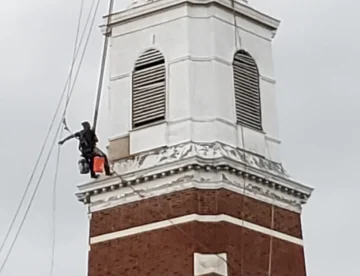
Steeples often carry the greatest visual and structural responsibility on a church property. They are exposed to wind, rain, ice, sun, and lightning, yet they are commonly the hardest part of the building to inspect. Aging paint, open seams, damaged louvers, cracked fiberglass, rotted wood, loose crosses, and failing flashing can all allow water into the structure below.
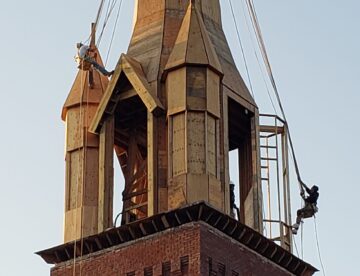
High-access work is not simply a matter of getting a lift to the site. Many church properties have limited access, mature landscaping, narrow drives, active ministries, or roofs that make conventional equipment impractical. Specialized steeplejack methods can allow craftsmen to reach difficult areas with less disruption and, in many cases, less expense than access-heavy approaches. The right method depends on the building, site conditions, height, and scope of repair.
A sound steeple restoration may include structural reinforcement, wood replacement, fiberglass repair, repainting with appropriate coatings, louver restoration, new flashing, leak remediation, and rebuilding sections that have deteriorated beyond repair. Cosmetic work alone is rarely enough if water has reached the framing.
Roofing, Flashing, and Water Control
Historic roof systems need attention before leaks become obvious inside. By the time water reaches a ceiling, it may have already moved through insulation, framing, or wall cavities. Worn shingles, failing flat-roof membranes, open counterflashing, deteriorated valleys, and undersized drainage components are common sources of trouble.
A preservation-minded roof repair respects the building’s appearance while correcting the details that keep water out. Sometimes that means a localized repair and carefully matched materials. In other cases, a roof has reached the end of its useful life and should be replaced before repeated patching consumes the maintenance budget without solving the underlying problem.
Church leaders should be cautious about judging a roof only by its surface. Flashing transitions at chimneys, parapets, dormers, towers, and steeple bases often matter as much as the field of the roof itself.
Masonry, Tuckpointing, and Exterior Details
Brick, stone, and terra cotta can endure for generations, but they are not maintenance-free. Missing mortar, cracks, spalling faces, failed coping joints, and leaking parapets allow moisture into the wall assembly. Left untreated, that moisture can weaken masonry, corrode embedded metal, damage interior finishes, and create safety concerns around entrances and walkways.
Tuckpointing is not merely filling gaps with new mortar. The existing mortar must be evaluated so that replacement material is compatible in strength, texture, color, and vapor permeability. Mortar that is too hard can force moisture through softer historic brick, causing the brick face to fail. Proper preparation, joint depth, cleaning, and curing all affect whether the repair protects the wall or only improves its appearance for a season.
Exterior preservation may also include painting, wood restoration, decorative trim repair, caulking, and replacement of deteriorated architectural elements. Each task should serve the larger purpose of keeping water out while retaining the character that makes the church recognizable to its community.
Protecting the Sanctuary Without Erasing Its Character
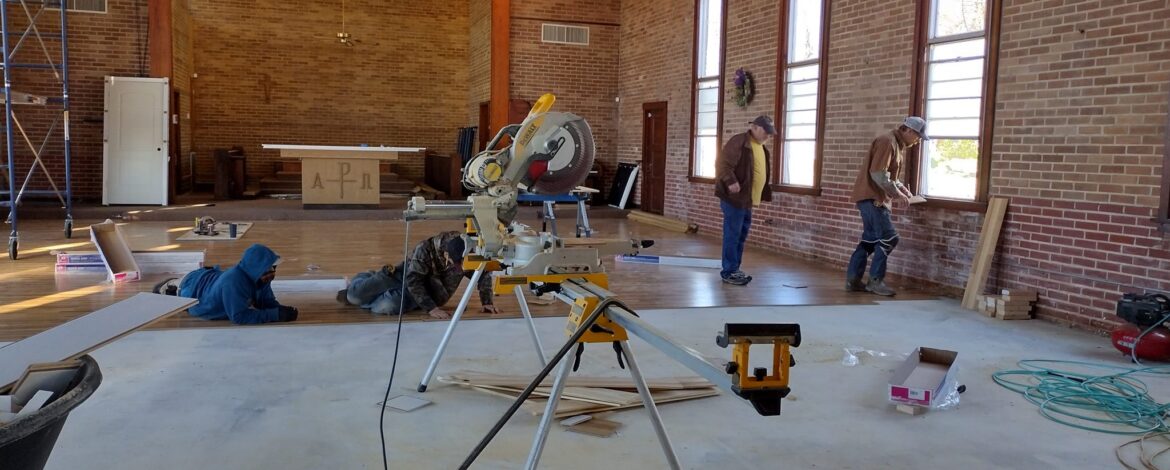
A sanctuary renovation has a different kind of responsibility. It must address present-day needs while respecting the space that has shaped the worship life of the congregation. Stained glass, plaster details, wood ceilings, historic pews, trim, flooring, and chancel features often require patient assessment rather than quick removal.
Stained-glass windows, for example, may show leakage because of failed perimeter sealants, deteriorated protective coverings, weakened lead came, or damage to the surrounding frame. The appropriate repair depends on the window’s condition and significance. A protective exterior system may help in one situation, while another window needs careful restoration of the glass, lead, and support system.
Interior work also calls for planning around worship schedules, funerals, weddings, schools, and community use. A capable church restoration contractor helps leaders phase work so that the congregation can continue its ministry with as little disruption as practical. Some projects can be completed in sections; others require a carefully chosen construction window. The best approach depends on the extent of damage and the building’s daily use.
A Practical Way to Set Priorities
When a historic church has several needs, trustees can feel pressure to solve everything at once. That is not always financially realistic, nor is it always necessary. A wise plan addresses conditions in the right order: safety concerns first, active water intrusion next, structural stability after that, and cosmetic or elective improvements once the building is protected.
A documented assessment gives the church a basis for making those decisions. It can distinguish urgent repairs from items that should be monitored, establish a phased budget, and help leaders communicate clearly with the congregation. Photographs, repair recommendations, and a description of likely consequences of delay can turn a vague maintenance discussion into responsible action.
It is also wise to ask whether a proposed repair will remain accessible for future maintenance. A beautiful restoration that cannot be inspected or serviced without major expense may create a new burden for the next generation. Durable materials, correct drainage, compatible coatings, and thoughtful access all contribute to long-term stewardship.
Choosing Craftsmen Who Understand Church Work
Historic preservation is not a job for a contractor who sees a church as just another building. The work calls for experience with high elevations, aging structural systems, historic materials, occupied sanctuaries, and the particular care that sacred spaces deserve.
Before authorizing work, church leaders should seek clear answers about the cause of the damage, the proposed repair sequence, the materials to be used, safety measures, access methods, warranty expectations, and how the project will affect church operations. A detailed scope protects the church from vague promises and gives the contractor a standard to meet.
Inspired Heights Ministries approaches this work as both a specialized trade and a ministry of stewardship. Preserving a steeple, restoring a sanctuary, or stopping a long-standing leak can help a congregation direct its energy back toward worship, discipleship, and service rather than recurring building emergencies.
A historic church does not need to become a museum piece to be preserved well. It should remain a living place of ministry, cared for with skill, prudence, and gratitude for those who built it before us. When a concern appears high on the roofline or deep within an aging wall, addressing it faithfully now is one way to prepare the church to serve the next generation.