A fiberglass steeple can look sound from the church parking lot while water is quietly entering at a seam, flashing connection, access door, or failed coating high above the roofline. Fiberglass steeple repair is not simply a matter of applying fresh paint. It is a careful restoration process that addresses the steeple shell, its protective finish, the roof transition, and the supporting structure beneath it.
For a congregation, the steeple is more than an exterior feature. It is often the most recognizable part of the church building – a visible witness in the community and a treasured part of its history. Caring for it faithfully means acting before a manageable maintenance concern becomes a leak, a structural repair, or an emergency.
Why Fiberglass Steeples Need Specialized Repair
Fiberglass was widely used for church steeples because it is lightweight, moldable, and more economical than some traditional materials. A properly manufactured and maintained fiberglass steeple can serve a church for many years. Yet it is not maintenance-free.
Sun exposure gradually breaks down exterior coatings. Wind movement can stress joints and fasteners. Freeze-thaw cycles can open small cracks, while water intrusion can weaken concealed framing, decking, or connections at the base. Repairs made years ago with incompatible materials may crack, discolor, or separate from the fiberglass surface.
The greatest challenge is that the visible damage is not always the whole story. A crack may be cosmetic, but it may also be the path water follows into the steeple cavity. Staining inside the sanctuary, a recurring roof leak near the steeple base, or loose exterior trim can point to a problem well above the area where the evidence appears.
A church deserves an assessment that distinguishes between surface wear and active deterioration. That protects the building, the congregation’s budget, and the heritage entrusted to its care.
Signs Your Church May Need Fiberglass Steeple Repair
Church leaders do not need to wait for a dramatic failure to investigate. A seasonal exterior review can reveal concerns early, especially after severe storms or prolonged winter weather. Pay attention to these conditions:
- Cracks, blisters, chalking, fading, or peeling paint on the steeple shell
- Open seams, loose trim, missing caps, or deteriorated sealant around joints
- Water staining, moldy odors, or dripping near the steeple base or upper sanctuary
- Rust stains around fasteners or signs that metal components are corroding
- A steeple that appears to lean, shift, or move excessively in wind
Some of these symptoms can arise from roofing or flashing failures rather than the fiberglass itself. That is why a complete inspection matters. The repair plan should follow the actual path of water and deterioration, not merely the most obvious stain or crack.
The Risk of Waiting Too Long
Deferred maintenance is understandable. Churches often have many competing needs, and work at elevation can appear costly or disruptive. Still, water rarely remains in one place. Once moisture bypasses the outer shell or roof transition, it can affect wood framing, steel supports, insulation, ceilings, electrical components, and interior finishes.
A coating failure handled promptly may require cleaning, surface preparation, localized fiberglass repair, sealant replacement, and a compatible protective coating. The same issue left unattended may require sections of damaged material to be rebuilt and hidden framing to be repaired. Timely work is often the most responsible use of church resources.
What a Proper Fiberglass Steeple Repair Involves
Every steeple has its own construction, age, access conditions, and repair history. Still, a lasting restoration generally follows a disciplined sequence rather than a one-day patch.
Inspection and Safe Access
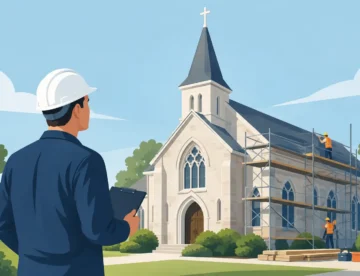
The work begins with a close examination of the steeple, its seams, decorative elements, fasteners, roof flashing, and base connection. The contractor should also evaluate the condition of the structure supporting the steeple where access allows.
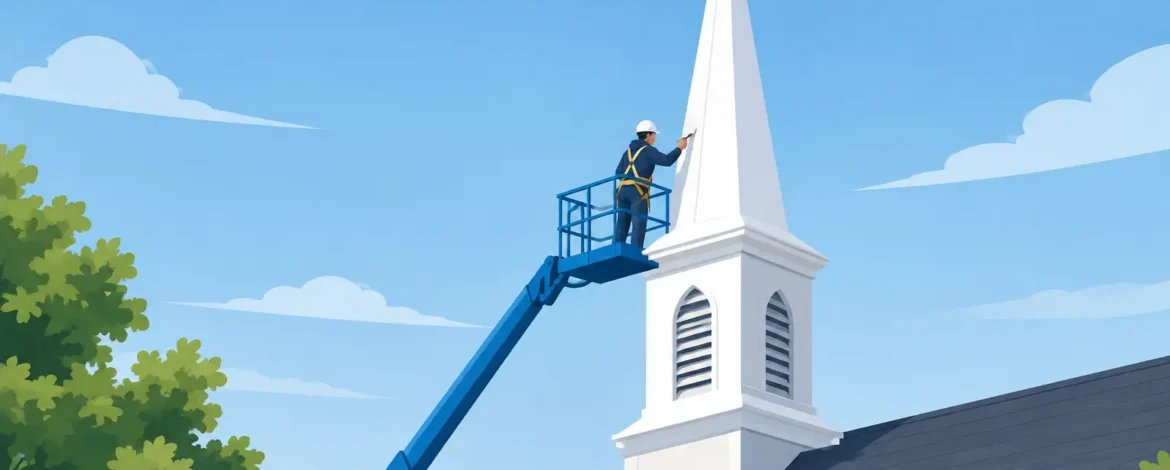
High access is a major consideration. Conventional scaffolding or large lifts may be appropriate in some settings, but they can also add cost, require extensive site preparation, and interfere with parking, entrances, or ministry activities. Specialized steeplejack methods can often provide a less intrusive approach while allowing skilled craftsmen to work directly at the needed elevation. The right access method depends on the site, height, roof geometry, and scope of repair.
Surface Preparation and Fiberglass Restoration
A durable repair depends on what happens before new material or paint is applied. Loose coatings, failed caulk, deteriorated previous patches, and contaminants must be removed or properly prepared. Cracks are evaluated to determine whether they are limited to the finish or extend into the fiberglass laminate.
When laminate repair is necessary, the damaged area is stabilized and rebuilt with compatible fiberglass materials and resin systems. The repaired area must be shaped and feathered so it sheds water properly and does not leave a conspicuous ridge or weak edge. Simply filling a crack with ordinary caulk may hide it briefly, but it rarely restores the strength and weather resistance required at the top of a church building.
Seams, Flashing, and Water Management
Many steeple leaks originate at transitions: where fiberglass sections meet, where trim is attached, where a cross or ornament penetrates the shell, or where the steeple meets the roof. These details deserve as much attention as the visible fiberglass.
Failed sealants are removed and replaced with materials suited to exterior movement and exposure. Flashing at the roofline is inspected and repaired as needed so water is directed away from vulnerable areas. If the steeple base has deteriorated decking or framing, that work should be addressed before finishes are restored. A beautiful exterior coating cannot compensate for a leaking base connection.
Protective Coatings and Finish Work
Once repairs are complete, the steeple needs a finish system designed for its material and exposure. Coatings must adhere properly to fiberglass, withstand ultraviolet light, and remain flexible enough to accommodate normal movement. Proper cleaning, priming when required, and application under suitable weather conditions all affect service life.
Color matching may be important, especially on historic church properties or when a steeple is highly visible from surrounding streets. Yet appearance should not be the only goal. The best finish is one that protects the fiberglass substrate and supports a realistic maintenance schedule for the church.
Repair, Restoration, or Replacement: How to Decide
Replacement is not always necessary when a fiberglass steeple begins to show its age. Many units can be restored successfully when the shell is generally sound and damage is localized. Restoration can preserve the original profile of the church while avoiding the cost and disruption of a full replacement.
Replacement may be warranted when deterioration is widespread, the steeple has significant structural failure, or previous repairs have left the assembly unstable. In some cases, a new steeple section or a rebuilt base is the wiser long-term investment. The decision should be based on close inspection, not an assumption that old fiberglass must automatically be removed.
Church trustees should ask for a repair scope that explains what is being addressed and why. It should identify the known defects, note areas that may require further evaluation after access is established, and distinguish necessary restoration from optional cosmetic work. Clear scope protects everyone involved and helps the congregation plan wisely.
Stewardship That Looks Beyond the Steeple
A steeple project is also an opportunity to inspect related building systems. Roof coverings near the steeple, parapet walls, gutters, masonry, cupolas, louvers, and upper windows often experience the same weather exposure. Coordinating needed repairs can reduce repeated access costs and prevent one unresolved problem from undermining another completed repair.
For historic congregations, this work requires restraint as well as skill. The goal is not to make an old church look artificial or erase the craftsmanship of earlier generations. It is to preserve the building’s character while correcting the conditions that threaten it. Careful repair honors the people who built the church and the people who will worship there after us.
At Inspired Heights Ministries, restoration work is approached as service to Christ and His Church. Skilled craftsmen can help church leaders understand the condition of a fiberglass steeple, weigh practical options, and pursue repairs that protect both the building and the ministry taking place within it.
If your steeple is showing cracks, fading, leaks, or signs of movement, do not let uncertainty force the issue onto another year’s maintenance list. A knowledgeable inspection can bring clarity, and timely care can help this familiar landmark continue pointing heavenward for generations to come.