
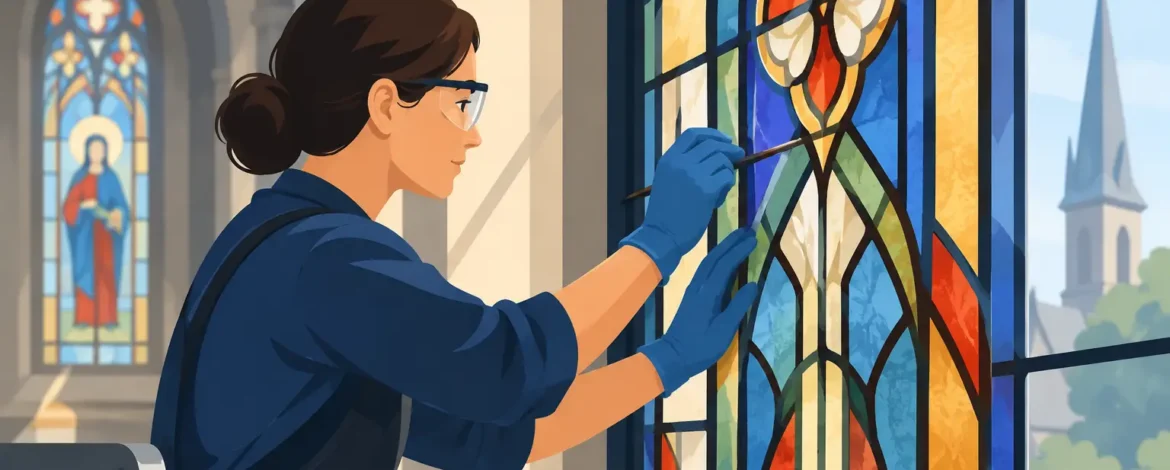
A stained-glass window can look beautiful from the sanctuary floor while trouble is growing behind it. A small roof leak, failed perimeter seal, loose piece of glass, or rusting support bar may remain unseen until wind-driven rain reaches plaster, framing, electrical systems, or treasured interior finishes. Church stained glass repair is not simply cosmetic work. It is careful stewardship of a window that carries Scripture, history, and the gathered memory of a congregation.
For many churches, these windows have served through generations of baptisms, funerals, Christmas services, and ordinary Sundays. Their condition deserves a response that honors both their spiritual purpose and the practical demands of preserving an aging building.
What Church Stained Glass Repair Should Address
A stained-glass window is a system, not just an arrangement of colored glass. Individual pieces of glass are held by lead came or another supporting material. The panel relies on waterproofing cement, reinforcement, putty or sealant, a frame, exterior glazing, and often protective glazing. When one part deteriorates, the damage can spread to the others.
The first task is identifying the true source of failure. Water on the interior sill does not always mean the stained glass itself is leaking. The issue may be a failed masonry joint, a deteriorated wood or steel frame, an open flashing detail above the window, or roofing trouble near a high sanctuary wall. Repairing only the most visible symptom can spend church funds without stopping the water.
A proper assessment considers the glass panels, lead lines, putty, frame condition, surrounding masonry, exterior sealants, drainage paths, and the wall or roof assembly above. On upper clerestory windows, towers, and steeples, safe access is part of an accurate diagnosis. Damage at elevation should not be guessed at from the ground.
The Warning Signs Trustees Should Not Ignore
Not every aging window needs full restoration. Minor maintenance completed at the right time can often prevent a much larger project. Still, certain symptoms deserve prompt attention, particularly after a hard storm or during a roof inspection.
Bulging or bowed panels are a common concern. They can indicate weakened lead came, failed reinforcement, or movement in the window frame. Cracked glass, missing putty, rattling panels in the wind, and visible gaps around the perimeter also leave the window vulnerable to additional water and wind damage.
Inside the sanctuary, watch for stained plaster, peeling paint, damp sills, musty odors, or recurring water near a window. Condensation between a stained-glass panel and exterior protective glazing may point to poor ventilation in the protective system. Trapped heat and moisture can accelerate deterioration rather than prevent it.
Rust deserves attention as well. Steel frames, saddle bars, and fasteners can expand as they corrode, placing pressure on fragile glass or pushing masonry apart. What appears to be a glass problem may involve structural movement that requires a coordinated repair plan.
Repair, Restoration, or Replacement: The Right Scope Depends
Church leaders are often told they must either leave an old window alone or replace it entirely. In many cases, neither extreme is necessary. The proper scope depends on the condition of the panel and the building around it.
Localized repair may be appropriate when damage is limited to a few broken pieces, a loose section of came, failed perimeter glazing, or a small area of decayed frame material. Matching glass, carefully fitted and installed, can preserve the design while addressing the immediate weakness.
More extensive restoration may be needed when lead came has become brittle, panels are sagging, cement has failed throughout, or prior patches no longer hold. This can involve removing the panel, documenting its layout, disassembling it, cleaning and preserving salvageable glass, rebuilding it with appropriate materials, and reinstalling it with sound support and weatherproofing. That work should be undertaken only when it is warranted, because removal and releading are more involved than a targeted repair.
Replacement is sometimes the responsible choice for severely compromised protective glazing, frames, or non-historic panels that cannot be safely repaired. Yet replacement should never be treated as an automatic shortcut. A church may lose irreplaceable craftsmanship, original glass, and visual continuity when a repairable historic window is discarded. The best decision balances safety, durability, budget, historical significance, and the congregation’s long-term plans for the property.
Protecting the Window From the Building Around It
Stained glass often suffers because of conditions outside the window itself. A failing roof edge can direct water into a sanctuary wall. Open mortar joints can let moisture travel behind a frame. Deteriorated exterior paint or sealant can expose wood sash to rot. These concerns need to be corrected as part of the same stewardship conversation.
For this reason, church stained glass repair is most effective when it is coordinated with masonry repair, tuckpointing, roof leak remediation, exterior painting, and frame restoration where needed. Solving the surrounding building failures protects the investment made in the glass.
Protective glazing also requires discernment. Clear exterior panels can shield stained glass from hail, vandalism, and windborne debris, but poorly designed coverings can trap moisture and heat. The glass needs a properly planned venting and drainage approach. Material selection matters too. Acrylic, polycarbonate, and glass each bring different strengths related to clarity, impact resistance, expansion, scratch resistance, and long-term appearance.
Why Access and Craftsmanship Matter at Height
Many of the windows most in need of attention are located high above the ground. Tower openings, sanctuary clerestories, gable-end windows, and steeple windows are difficult to inspect and even harder to repair without disrupting church life or creating unnecessary cost.
Conventional scaffolding can be appropriate for some projects, especially when broad masonry or roof work is underway. But it is not the only answer. Experienced steeplejack methods can allow qualified craftsmen to reach difficult areas with less intrusive access, reducing the footprint around the church and often helping congregations avoid the expense of a large scaffold installation.
High-access work demands more than courage. It requires training, fall protection, careful rigging, knowledge of historic materials, and an understanding of how to protect the sanctuary and grounds below. A pane of century-old glass cannot be treated like a standard commercial window. Nor should a repair crew seal over an underlying leak and call the problem solved.
Planning a Faithful Repair Project
A clear condition assessment gives pastors, trustees, and building committees a better basis for decision-making. Document each window’s condition, identify active leaks, note safety concerns, and separate urgent stabilization from work that can be phased over time. This helps a church build a realistic budget instead of reacting only when a storm creates an emergency.
Before work begins, leaders should ask how the contractor will access the windows, protect worship areas, contain dust and debris, manage historic glass, and coordinate related roofing or masonry repairs. Older windows may include lead-based materials, so appropriate handling practices are essential. The church should also understand what repairs are intended to last for many years and what measures are temporary stabilization.
Timing can make a difference. Exterior work should be planned around weather conditions, scheduled services, weddings, funerals, and seasonal ministry events. When a window must be removed for shop restoration, temporary weather protection should be part of the plan. Good communication allows the congregation to continue worshiping with confidence while the building is cared for.
Preserving Light for the Next Generation
A church building is not the Church itself, but it is often a visible testimony to the faithfulness of those who have worshiped within its walls. Stained glass teaches, remembers, and directs the eye toward the light. Allowing it to deteriorate through neglect can turn a manageable maintenance concern into a costly loss.
Inspired Heights Ministries serves churches with the skilled restoration work and ministry-minded care needed for difficult projects, including windows high above the sanctuary floor. When a window shows signs of failure, the wisest next step is not to wait for more water, more broken glass, or another storm. Seek a careful evaluation, address the cause as well as the symptom, and preserve what God has entrusted to your congregation.


